
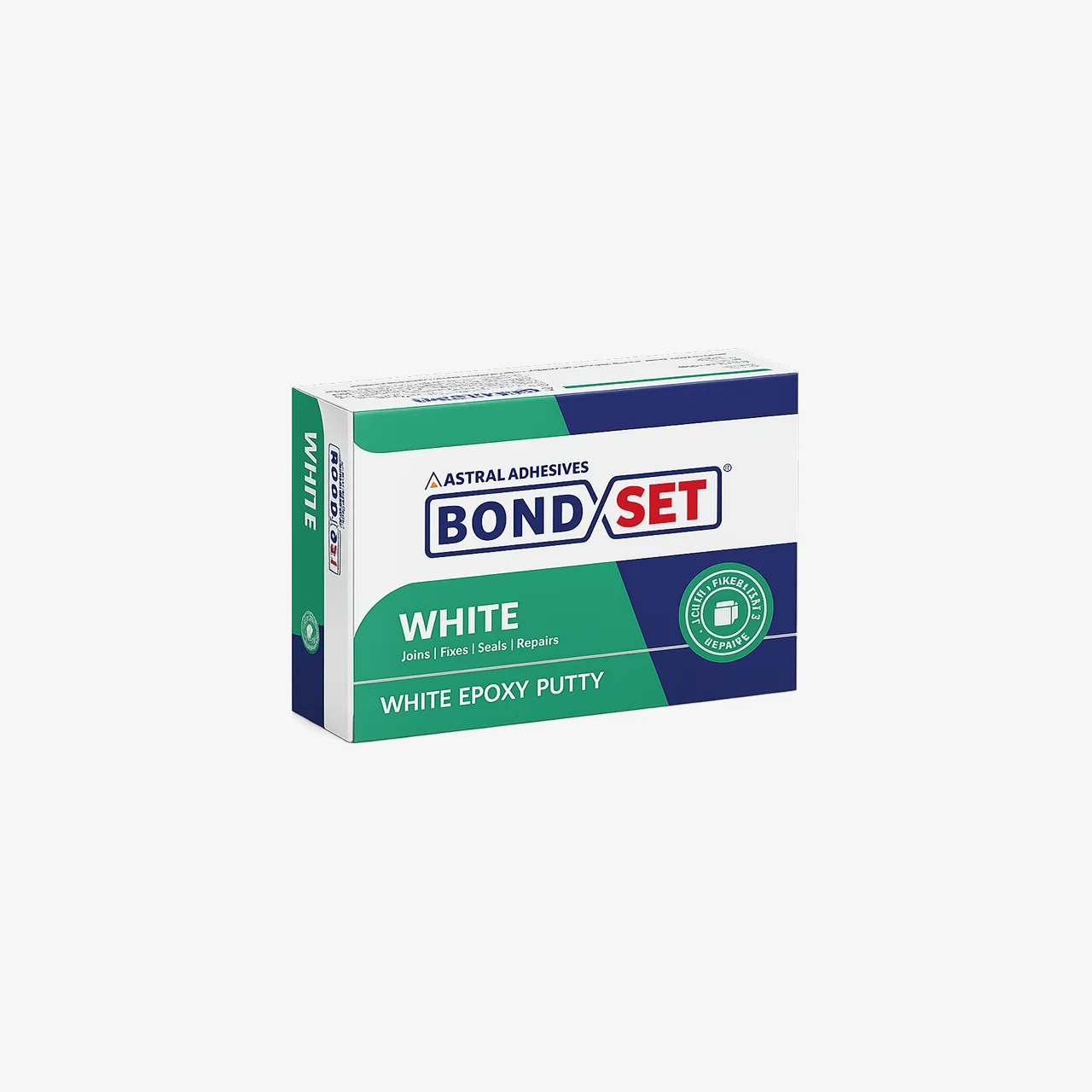
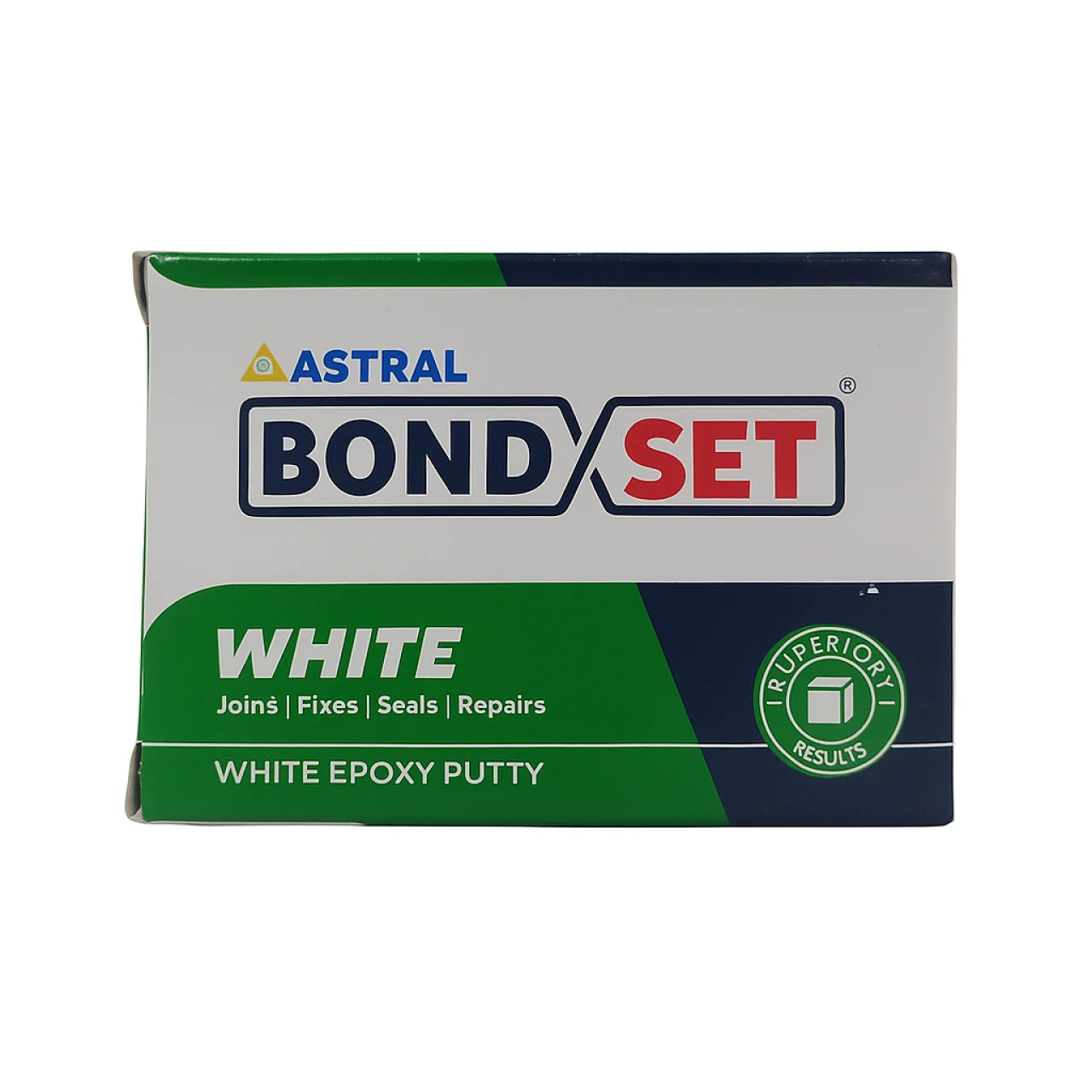


Astral Bondset Sanitary Underwater: White Epoxy Putty for Plumbing & Wet Repairs
For repairs requiring hygiene and a clean white finish—especially in bathrooms, kitchens, and wet areas—Astral Bondset Sanitary Underwater is the specialized solution. This is a two-component (2K) epoxy putty designed for permanent, structural repairs to sanitaryware, tiles, pipes, and concrete. Its unique formulation allows it to bond and cure effectively even underwater, making it indispensable for leaks and repairs where drying the surface is impossible.
Astral Bondset Sanitary Underwater cures to a bright white, non-yellowing solid that is resistant to mold and mildew. This makes it ideal for restoring chipped basins, fixing loose tiles, sealing cracks near drains, or repairing ceramic parts where a clean aesthetic is required.
Why Choose Astral Bondset Sanitary Underwater?
Its sanitary grade and wet-application ability make it unique among epoxy putties:
- Wet/Underwater Bonding: Its primary strength is bonding to damp or fully submerged surfaces like leaking pipes or pool tiles.
- Sanitary Finish (White): Cures to a smooth, bright white finish that blends seamlessly with ceramic, porcelain, and white sanitary fittings.
- Structural Strength: Provides a durable, rock-hard repair that can be sanded, drilled, and painted once fully cured.
- Water & Mold Resistance: Forms an impermeable seal that protects against water damage and resists common mold growth in bathrooms.
Key Features of Astral Bondset Sanitary Underwater
- Two-Component Epoxy: Ensures a strong, chemical cure with a 1:1 resin/hardener mix.
- Non-Sag Putty: Ideal for vertical and overhead repairs, such as fixing tiles on a bathroom wall.
- Machinable: Can be finished with enamel or PU coatings for an aesthetic match.
- Fast Setting: Achieves handling strength quickly, typically within 15–20 minutes.
Recommended Application Areas
This white repair putty is essential for:
- Plumbing: Sealing leaks in ceramic pipes, water tanks, and under-sink joints.
- Sanitaryware: Repairing chipped porcelain basins, toilets, and ceramic fittings.
- Tiling: Fixing loose tiles or patching concrete cracks in wet zones before grouting.
- General Repairs: Restoring damaged areas on ceramic, wood, metal, and fiberglass surfaces that require a clean white color.
Technical Specifications: Astral Bondset Sanitary Underwater
| Feature | Details |
|---|---|
| Brand | Astral |
| Product | Bondset Sanitary Underwater |
| Type | Two-Component Epoxy Putty |
| Mix Ratio | 1:1 (By volume/length) |
| Working Time | 8 – 12 Minutes |
| Set Time (Handling) | 15 – 20 Minutes |
| Color (Cured) | White |
How to Use Astral Bondset Sanitary Underwater
- Preparation: Clean the surface thoroughly—it must be free of grease and loose debris. Lightly roughening the area with sandpaper improves bonding dramatically, especially underwater.
- Mixing: Cut off the required amount. Knead the two components (resin and hardener) together rapidly by hand until the color is uniform white (no streaks). You have 8-12 minutes to work.
- Application: Press the mixed putty firmly onto the repair area, forcing it into cracks or holes. Shape and smooth the putty before it hardens. For underwater use, press firmly and hold until adhesion is felt.
- Finishing: Once fully cured (24 hours), the area can be drilled, sanded, or painted. Learn more about effective epoxy repair techniques.
Frequently Asked Questions (FAQ)
Q: Does the white color fade or yellow over time?
A: No, this sanitary-grade formulation is designed to resist yellowing and maintain its bright white finish, making it perfect for visible bathroom and kitchen areas.
Q: How long does it take to fully cure?
A: While it sets quickly (15-20 minutes for handling), full structural cure takes 24 hours. Avoid subjecting the repair to heavy load or constant water flow for that period.
Q: Can I use this on wet marble or granite?
A: Yes, it bonds effectively to wet or damp stone surfaces, making it ideal for repairs on countertops and vanity areas.









amazing results
very happy with this
exactly what was needed
easy to apply
exactly what was needed